
Some Favorite Construction Books

People are always asking me what books I’d recommend to learn about construction, or use as a reference. While nothing beats being out in the field, here are 5 of my favorites that have been very helpful to me:
1. “Builder’s Guide” series, by Joe Lstiburek
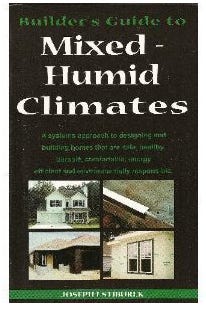
An absolute classic, and the first book my boss gave me when I was moved up to PM at a general contracting office. There is a guide available for each region [cold, hot/humid, dry, etc], and they are full of easy-to-understand diagrams, explanations, and construction details focused on quality building techniques and smart climate mediation strategies. It explains complicated concepts like thermodynanics and vapor management with clear, common language…and did I mention there are lots of pictures? Lstiburek is a legend in building science circles, and for good reason!
2. “Building Construction Illustrated,” Francis D. K. Ching
Less technical than #1 on this list, this book covers all areas of construction, giving an overview of different construction types, parts of buildings like doors/windows, and MEP. As the name suggests, it’s full of pictures - super clear, easy to understand, and a no-brainer if you’re trying to learn about construction. It’s no surprise that it’s in its 6th edition!
3. “Mechanical and Electrical Equipment for Buildings” by Walter Grondzik anb Alison Kwok
Also affectionately known as “MEEB,” and now in it’s 13th edition, this book is an amazing resource on some of the most complicated parts of a building - MEP systems. With a solid overview of a wide range of size/building types, this book is an essential reference, and a regular for architects studying for their qualifying exams and on the syllabus in construction management and architectural engineering courses. Tons of images and diagrams, clear explanations of both theory and practical information, and code references make this book a must-have!
4. “Fundamentals of Building Construction: Materials and Methods” by Edward Allen and Joseph Iano
When you’re ready to dig deeper than the material Ching provides, this is your next step. With a ton of information, including updates on some of the latest methods used in the industry today, this book still grounds you in the fundamentals [as the name suggests…] The technical sections on structural systems, cladding assemblies, water management, and roofing details are particularly helpful, with copious images and clear, easy to understand writing. Another classic!
5. “Building Codes Illustrated” by Francis D.K. Ching and Steven Winkel
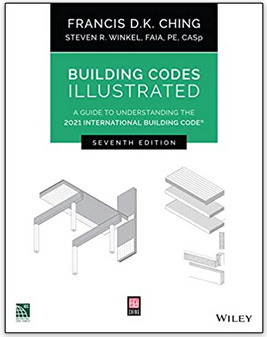
Ching strikes again with another must-have! Make sure you get the edition that’s appropriate to your jurisdiction - most use codes that are a few years behind the most recent published code. [If you’re not sure what code your jurisdiction uses, check out your building department’s website - and don’t forget to look for local amendments!] Many items in code are difficult to understand unless you’re used to working with them every day, and even then, they can be quite convoluted. Ching shows how tricky stuff like stairs, egress, fire separation, working within existing buildings, elevators, use and occupancy, construction types, etc are covered in code using - you got it - illustrations. It is *very* useful to learn how code actually works!
I could add so many more books, but those 5 should get you started!
Any I missed? What are your favorites? Comment below!